
Starting a digital HR journey does not require a full system overhaul. Indian SMEs can begin by digitising payroll, statutory compliance, and employee records using purpose-built HRMS platforms. This structured transition reduces legal exposure under the EPF Act, Labour Codes, and the DPDP Act, 2023, while improving operational efficiency without disrupting day-to-day business.
For many growing Indian businesses, the decision to move away from manual HR processes feels larger than it needs to. The assumption is often that digitising HR means replacing everything at once — new software, new workflows, new training, new costs. In practice, the transition can begin with a single function and expand from there. What matters is that the move happens before the compliance consequences of staying on spreadsheets become unavoidable.
Why Indian SMEs Keep delaying Their HR digitalisation (And Why That’s Getting Riskier)
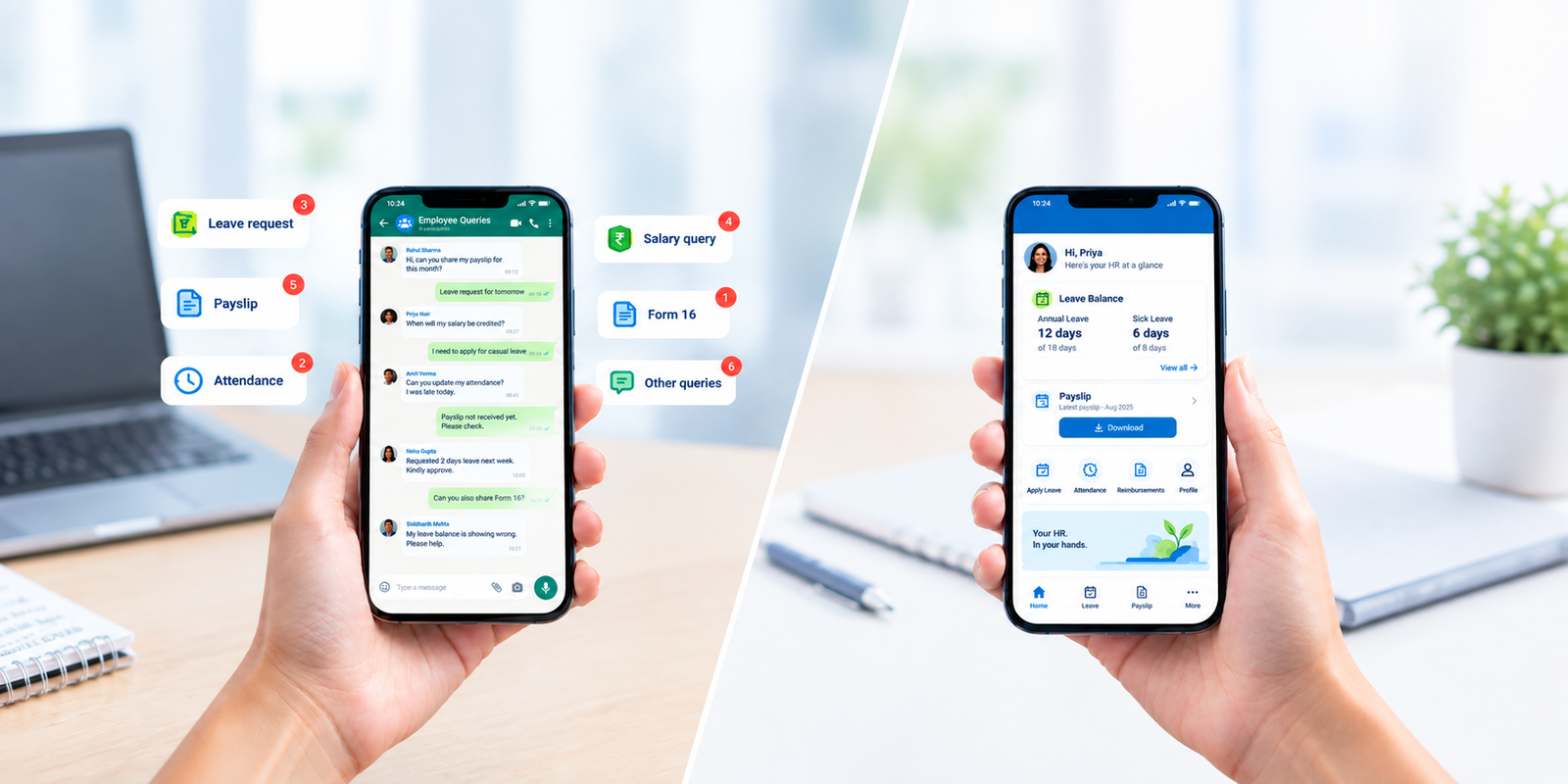
The hesitation is understandable. HR systems in most Indian SMEs have evolved informally, built around the preferences of whoever manages them. Payroll runs on Excel. Leave is tracked over email. Attendance is maintained in a register or a shared sheet. These systems work until they don’t.
The compliance environment in 2026 has made the cost of staying informal measurably higher. The four Labour Codes covering wages, industrial relations, social security, and occupational safety are being operationalised in stages, altering how wages are defined, how PF is calculated, and what records must be maintained. The Digital Personal Data Protection (DPDP) Act, 2023, now governs how employee data is stored and processed. Regulatory scrutiny around EPFO and ESIC compliance for SMEs has increased in recent years.
A structured HRMS transition does not require replacing all of this overnight. It requires identifying where the exposure is greatest and starting there.
Where Should an Indian SME Start Its HRMS Transition?
1. Payroll and Statutory Compliance First
Payroll is where manual errors carry the most direct financial and legal risk. Under Section 14B of the EPF Act, 1952, employers may face significant financial penalties for delayed or inaccurate contributions. Misapplied TDS slabs under Section 192 of the Income Tax Act add further exposure. Starting digital HR with payroll automation immediately reduces the most quantifiable risk category.
A structured HRMS platform handles EPF, ESIC, professional tax, and TDS calculations automatically, generates audit-ready payslips, and maintains records in a format that withstands regulatory scrutiny.
2. Employee Data and DPDP Compliance
The DPDP Act, 2023, requires that employee personal data including Aadhaar numbers, bank details, and health records — be stored securely, processed with documented consent, and deleted when no longer required. Maintaining employee data in unsecured spreadsheets or shared drives may increase compliance and data-security risks under the DPDP Act, 2023. The Act introduces substantial financial penalties for serious data protection violations.
Transitioning employee records to a structured HRMS with role-based access and encrypted storage addresses this risk without requiring any other operational change at the outset.
3. Attendance and Leave Management
Attendance discrepancies can frequently contribute to payroll disputes and reconciliation challenges in SMEs. Under the Code on Wages, 2019, payment of wages must align with documented attendance and leave records. Digitising attendance and leave management creates a verifiable audit trail, reduces month-end reconciliation time, and minimises the conditions for employee disputes.
What a Phased HRMS Implementation Looks Like for an SME
A practical digital HR transition for an Indian SME does not need a six-month implementation plan. A phased model can look like this:
- Phase 1: Migrate payroll to a structured HRMS. Establish correct salary architecture aligned with the Code on Wages. Automate EPF, ESIC, TDS, and professional tax.
- Phase 2: Digitise employee records and data storage. Establish DPDP-compliant data handling with access controls.
- Phase 3: Move attendance, leave management, and onboarding onto the platform. This phase helps improve day-to-day HR efficiency and reduces administrative workload over time.
Platforms like ABStart, built specifically for growing Indian companies and managed by TalentCo HR Services, support this phased approach. The platform covers end-to-end HRMS functions from employee onboarding and lifecycle management to statutory compliance automation and payroll processing — within an architecture designed around India’s regulatory requirements. Backed by over 30 years of HR leadership, ABStart is built by HR professionals with extensive experience managing compliance and workforce operations for Indian businesses.
The Cost of Waiting to Digitise HR
Manual HR processes carry a visible cost in time and a less visible cost in risk. HR personnel managing spreadsheet-based payroll spend significant hours each month on reconciliation and statutory filing — hours that could be redirected to people development or business growth. As labour law reforms continue to evolve, businesses may benefit from reviewing and aligning their salary structures proactively. Businesses that begin their digital HR transition now are not just gaining efficiency ; they are building systems that can better support future compliance and operational requirements.
Key Takeaways
- 1) A digital HR transition does not require a full-scale overhaul. Beginning with payroll and statutory compliance addresses the highest-risk area first.
- 2) The DPDP Act, 2023, highlights the importance of secure employee data storage and stronger data protection practices.
- 3) The Code on Wages, 2019, and the four Labour Codes require salary structures that manual spreadsheets cannot maintain accurately at scale.
- 4) EPFO and ESIC audit scrutiny of SMEs is increasing. Accurate, audit-ready records are no longer a best practice — they are a regulatory requirement.
- 5) Purpose-built HRMS platforms like ABStart allow growing Indian companies to transition in phases, without disrupting operations.
References
[1] Code on Wages, 2019 – Ministry of Labour and Employment: labour.gov.in
[2] Employees’ Provident Fund Organisation (EPFO) – Section 14B, EPF Act, 1952: epfindia.gov.in
[3] Digital Personal Data Protection Act, 2023 – Ministry of Electronics and IT: meity.gov.in
[4] Code on Social Security, 2020 – Ministry of Labour and Employment: labour.gov.in
[5] ESIC – Employees’ State Insurance Corporation Official Portal: esic.gov.in
[6] Ministry of MSME – MSME at a Glance: msme.gov.in
[7] PRS Legislative Research – Labour Codes Summary: prsindia.org
TalentCo HR Services LLP is an HR consulting and solutions company offering services across HR operations, compliance, liasoning, payroll management, and HR technology through its proprietary platform ABStart. This article is intended for general informational and educational purposes only. Labour laws, tax regulations, and compliance requirements are subject to change based on government notifications and jurisdictional updates. Readers are advised to independently verify current regulations or consult qualified professionals before making any business or financial decisions.