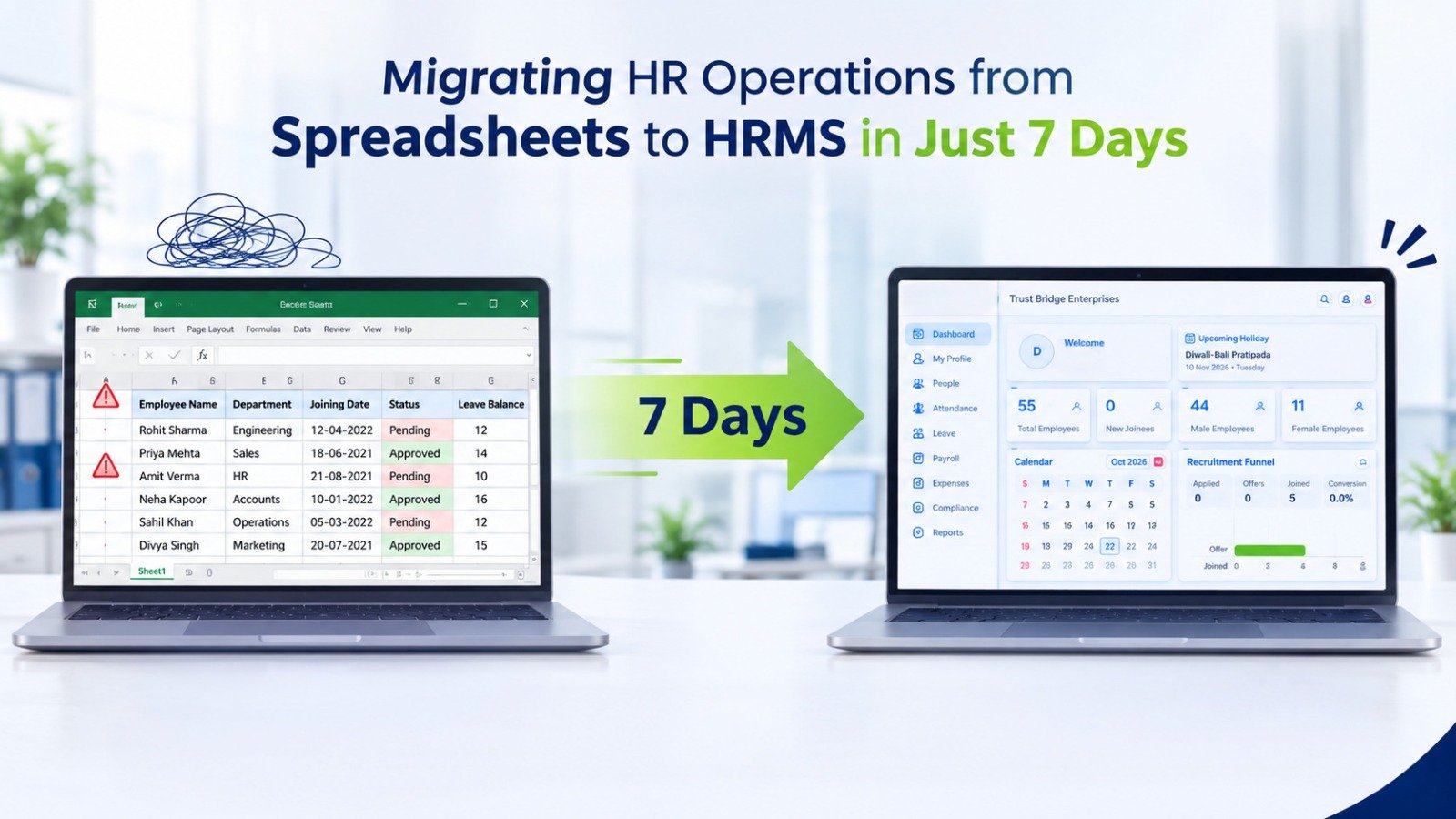
An Indian SME can move its core HR operations from spreadsheets to ABStart HRMS in seven days when employee records are prepared and the initial scope is agreed. ABStart’s process covers importing employee data, configuring attendance and leave policies, mapping salary structures, checking payroll inputs, onboarding users and switching on everyday HR workflows. By Day 7, employees can begin using digital attendance and leave requests, while the payroll setup has been checked against existing records before its first live processing cycle.
The seven-day plan below shows what the business needs to prepare, what happens on each day and how to keep day-to-day work running during the transition. More complex organisations can follow a phased rollout by location or workforce group.
What Should Be Ready Before the Seven-Day Migration Starts?
The most useful preparation happens before Day 1. A complete employee master and a clear person responsible for decisions prevent avoidable delays during configuration.
1.Employee master: Verify employee names, joining dates, work locations, reporting managers, relevant identity and statutory identifiers, and bank information.
2. Salary and payroll records: Keep current salary structures, applicable deductions, last month’s payroll output and any approved salary changes ready for comparison.
3. Attendance and leave policies: Document shifts, weekly offs, holiday calendars, leave balances, approval rules and policies that differ by location.
4. Spreadsheet inventory: Identify the files currently used for employee records, attendance, leave, payroll and statutory reporting, including their owners.
5. Implementation owner: Nominate an HR contact who can answer policy questions, review imported data and approve the first live workflows.
Do not use migration as the moment to redesign every HR policy. Start with current approved rules, then plan changes separately after the system is stable.
What Does the Seven-Day HRMS Migration Plan Look Like?
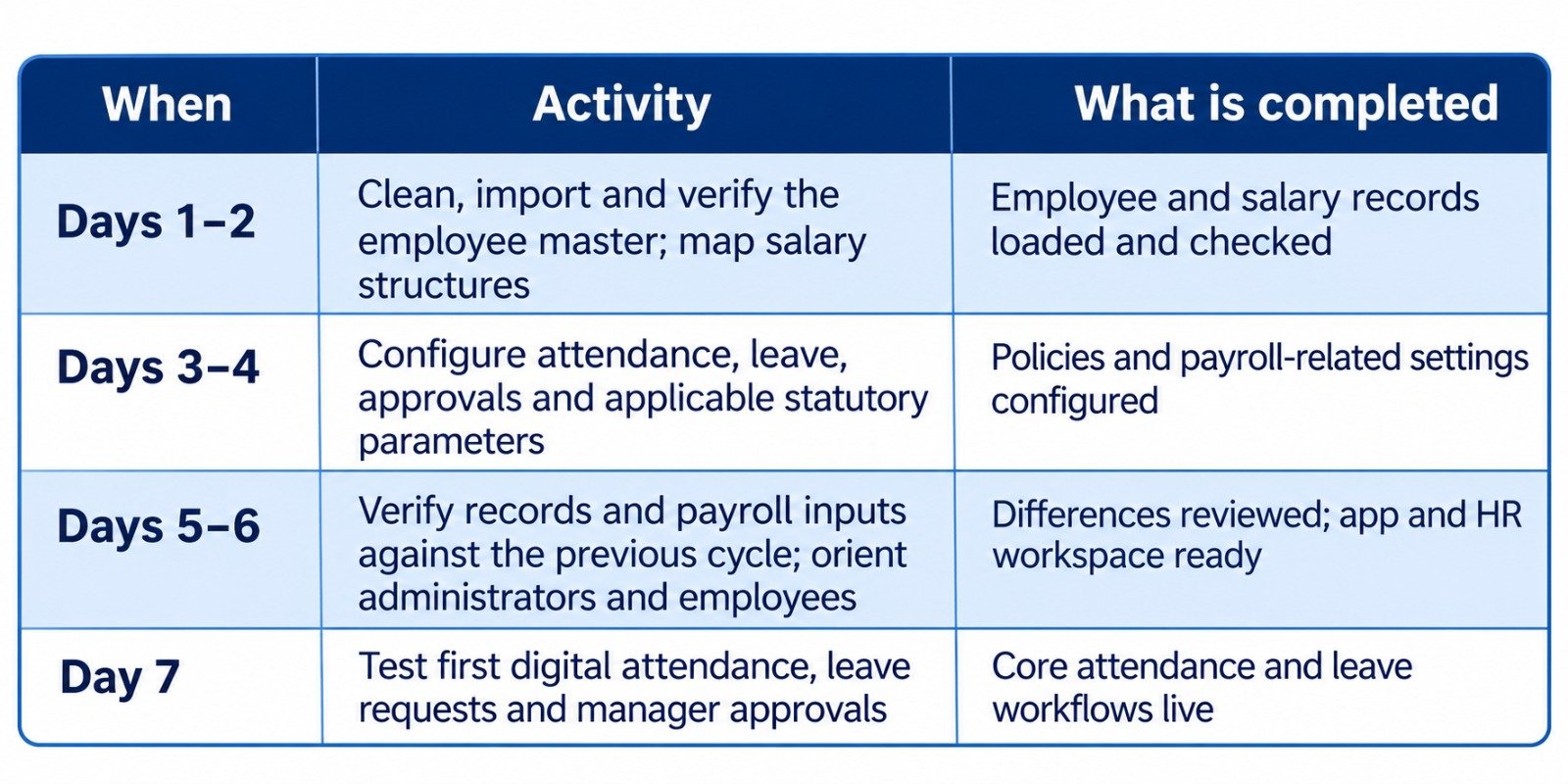
The Day 7 milestone is an initial operational go-live. Payroll settings and historical inputs are reconciled during the rollout; the first production payroll is run according to the employer’s normal payroll calendar and approval process.
What Happens During Each Stage?
Days 1–2: Import employee data and map salary structures
ABStart begins with the employee information already held in the organisation’s spreadsheets. The team prepares the import template, identifies missing or duplicate entries and maps salary components and deductions to the appropriate employee records. HR reviews imported data against the source files before it is accepted as the working record.
Days 3–4: Configure the policies employees actually follow
Attendance locations, shifts, leave rules, holiday calendars and approval responsibilities are configured to match the employer’s agreed policies. Where relevant, location-based or face-based attendance settings are included. Applicable PF, ESI, professional tax and salary TDS settings are reviewed for the workforce and locations involved.
Days 5–6: Verify the setup and introduce the employee app
HR and payroll owners compare the new records and payroll calculations with an existing payroll period, investigate differences and correct source data or configuration as needed. Administrators test their workflows, and employees receive short instructions for the actions they will use first. ABStart supports employee self-service on iOS and Android.
“Payroll errors are rarely just calculation errors. They often begin earlier, when a leave approval sits in a chat, attendance sits in a separate file, and salary details sit in a spreadsheet. Bringing these records together can reduce manual reconciliation and make payroll more accurate.”
Shailendra Dhamdhere, Founder, ABStart HRMS
Day 7: Start everyday HR workflows
Employees test digital punch-in and leave submissions. Managers verify that requests reach the right approvers. HR checks the activity records and keeps a nominated contact available for queries. Previous spreadsheets should be retained securely as reference records, with access limited to authorised personnel.
How Can SMEs Avoid Disrupting Daily Operations?
Use a controlled transition rather than switching every process at once. Keep the existing records available for verification while imported employee details, policy rules and payroll inputs are being checked. Explain to employees only the first tasks they need, such as marking attendance, requesting leave and accessing payslips when available.
Managers need a separate briefing on approval responsibilities and attendance exceptions. Field staff may also need instructions specific to their configured attendance method. Once records and workflows are confirmed, HR can establish which system is the official source for new transactions so that competing versions do not continue indefinitely.
Which Payroll, Data and Compliance Checks Matter Before Go-Live?
An HRMS helps organise information and apply configured rules, but employers remain responsible for verifying their policies and statutory obligations. Before relying on the migrated data, check the following against your current workforce and payroll records:
1. Payroll reconciliation: Employee headcount, salary structures, applicable earnings and deductions, leave balances and approved attendance exceptions.
2. EPF and ESI: Coverage and eligibility, employee identifiers, contribution settings, and the reporting or return requirements applicable to the establishment.
3. Salary TDS and professional tax: Applicable tax-year settings and forms, plus state-specific professional-tax treatment where required.
4. Access to employee information: Who may see or edit salary, identity, bank and personal data; how sensitive files are transferred and stored; and how past records are retained.
India’s four Labour Codes took effect on 21 November 2025, consolidating 29 central labour laws. The Income-tax Act, 2025 came into force on 1 April 2026. Employers should check current provisions and relevant state rules when configuring their processes, rather than assume a software setting alone establishes compliance. See the official Ministry of Labour and Employment announcement and Income Tax Department announcement.
Employee records also contain sensitive personal information. The Digital Personal Data Protection Rules, 2025 were published in November 2025 and have a phased commencement schedule. During migration, apply appropriate access restrictions and secure transfer practices, and review obligations as the relevant provisions come into force. See the MeitY DPDP Rules and enforcement timeline.
What Common Mistakes Can Delay HRMS Migration?
1. Importing employee records without checking duplicates, missing fields or out-of-date salary information.
2. Changing attendance or leave policies in the middle of the system migration.
3. Skipping the comparison of payroll inputs and calculated outputs with an earlier approved payroll period.
4. Giving too many employees access to payroll or personal information.
5. Leaving both spreadsheets and the HRMS open for uncontrolled editing after go-live.
The way to avoid these mistakes is straightforward: assign an owner, check source data, test the configured rules and confirm the system of record before moving into normal operations.
How Can Businesses Measure Success After Migration?
Review the first two payroll cycles rather than judging the change only by whether employees could log in on Day 7.
1. Payroll accuracy: The number and type of corrections needed after each cycle.
2. Month-end effort: The time HR spends consolidating attendance, leave and payroll information.
3. Adoption: Whether employees and managers complete expected attendance, leave and approval actions through the new system.
4. Statutory timeliness: Whether applicable returns and payments are completed according to the relevant deadlines.
If an issue persists, identify whether the cause is source data, configuration, approvals or user adoption, and address that specific step.
How Does ABStart Support the Seven-Day Transition?
ABStart was developed within TalentCo HR Services, drawing on practical HR, payroll and compliance experience. That experience shapes the transition from separate employee, attendance, leave and salary spreadsheets to connected HR workflows.
For a prepared SME, the seven-day rollout follows the same sequence described above: prepare and import employee data, configure existing policies, check payroll inputs, introduce the HR workspace and employee app, then activate everyday attendance and leave processes. The team works through differences found during verification rather than carrying unchecked records into the new system.
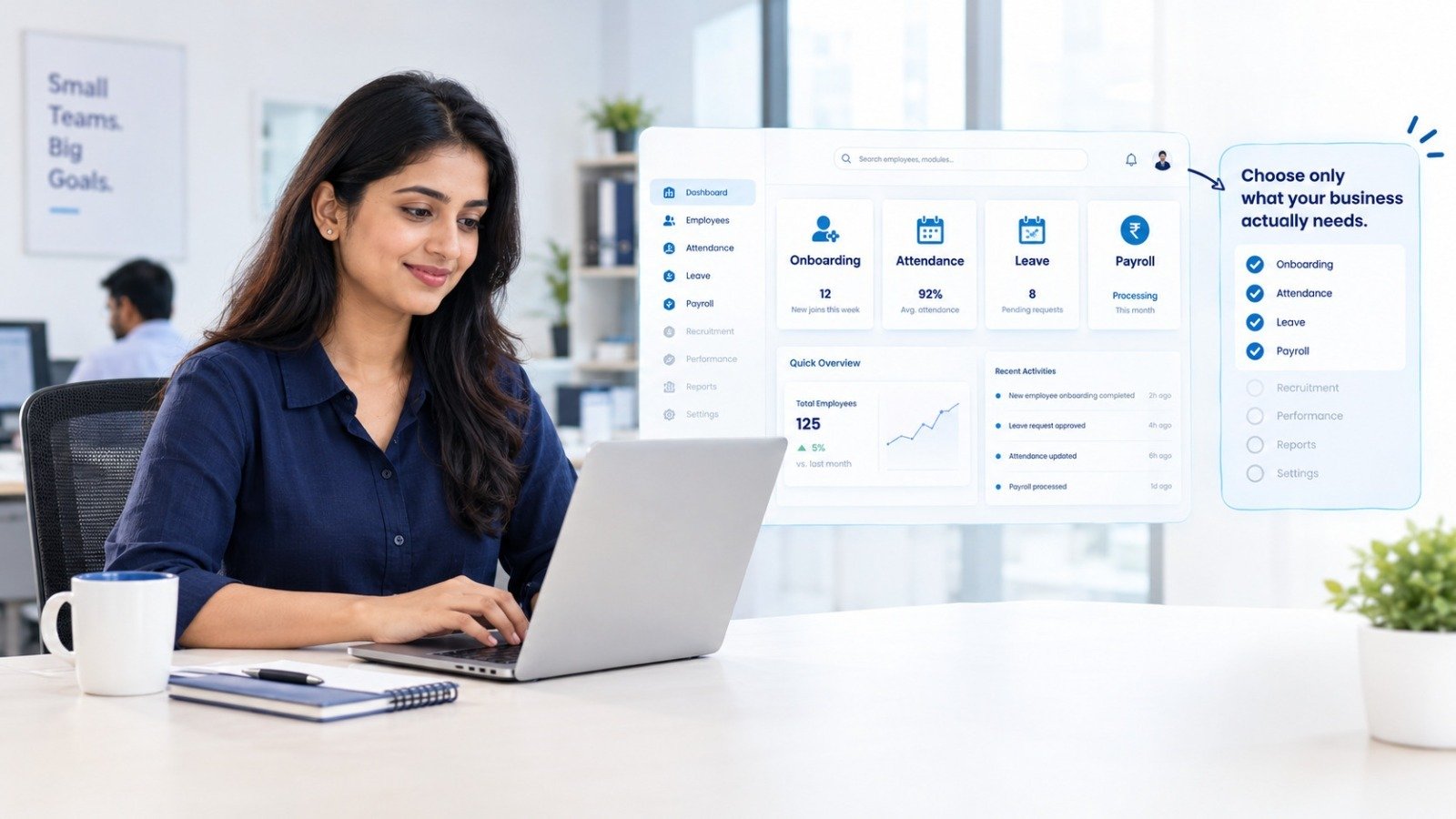
ABStart combines employee records, onboarding, attendance, leave, expenses, payroll and compliance workflows in one platform, with a web workspace for HR and self-service on iOS and Android. You can start with the functions your team needs immediately and add other capabilities as the organisation grows.
Considering a move from spreadsheets? Share your current employee records and HR process with the ABStart team, and book a walkthrough of the seven-day migration approach for your organisation.
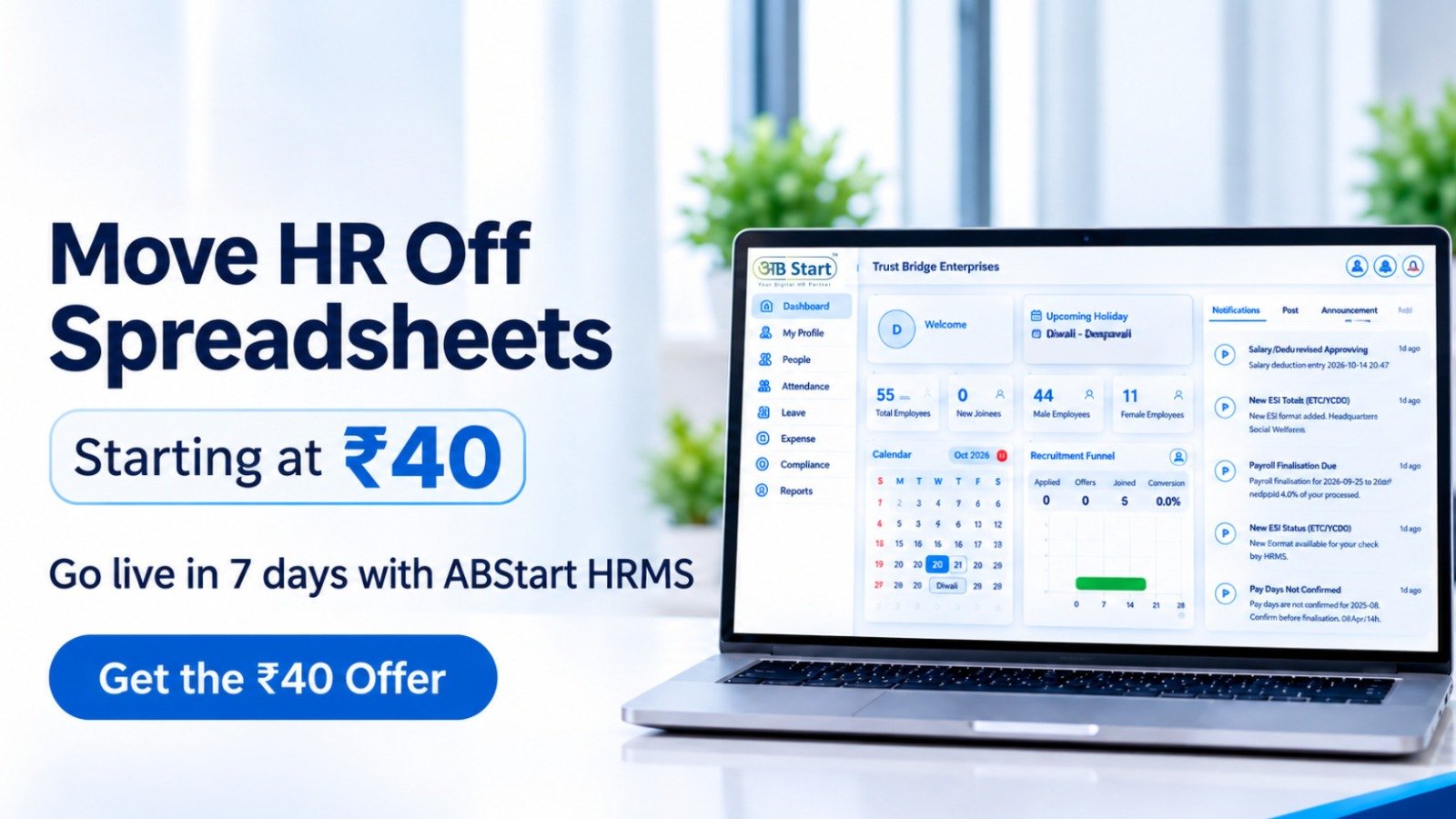
Explore ABStart HRMS and request a demo
₹40 per employee per month. Check the pricing details for complete terms & conditions.
References and further reading
ABStart HRMS: product and implementation context
Ministry of Labour and Employment: four Labour Codes implementation
Income Tax Department: Income-tax Act, 2025 commencement
MeitY: Digital Personal Data Protection Rules, 2025 and enforcement timeline
EPFO: employer portal and filing information
This article is for general information. HRMS configuration should reflect current applicable laws, rules and approved company policies.