
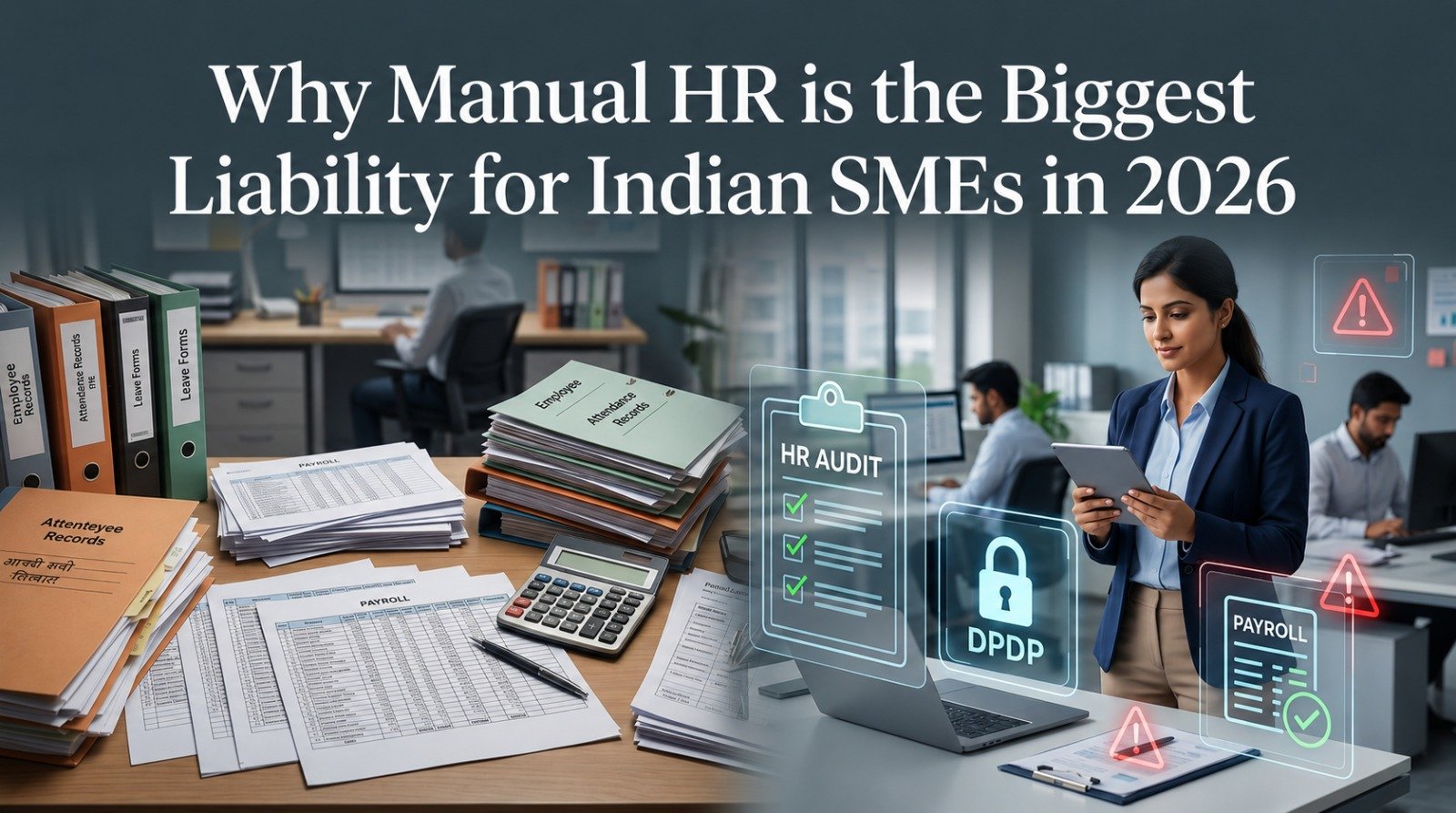
For Indian SMEs, managing HR manually on spreadsheets in 2026 is no longer just inefficient it is a direct
compliance risk. With four new Labour Codes pending full implementation, DPDP Act obligations, and rising statutory penalties, manual HR processes expose businesses to legal liability, payroll errors, and employee disputes that structured HRMS platforms like ABStart are specifically built to prevent.
The Scale of India’s SME HR Challenge
India’s MSME sector employs over 11 crore people and contributes approximately 30% of the country’s
GDP, according to the Ministry of MSME. Yet a significant proportion of these businesses continue to
manage their HR operations through spreadsheets, informal records, and manual payroll calculations a
practice that was manageable a decade ago but carries serious risk in 2026.
The regulatory landscape has fundamentally shifted. Three converging developments make manual HR anactive liability rather than a passive inconvenience:
• The four Labour Codes (Code on Wages, Industrial Relations Code, Code on Social Security, and the
Occupational Safety Code) are expected to be operationalised in stages, directly altering wage
definitions, PF structures, and leave entitlements.
• The Digital Personal Data Protection (DPDP) Act, 2023, enforces obligations around employee data
handling, storage, and consent obligations that are impossible to manage systematically on
spreadsheets.
• The Employees’ Provident Fund Organisation (EPFO) and ESIC continue to intensify audit activity,
with growing scrutiny of SME payroll records and contribution accuracy.
Where Manual HR Breaks Down
Payroll Errors and Statutory Miscalculations
Manual payroll is inherently prone to error. Miscalculating EPF contributions, applying incorrect TDS slabs,
or missing professional tax deductions creates exposure at multiple levels. Under Section 14B of the EPF
Act, employers can face damages of up to 100% of the arrears due for delayed or incorrect contributions.
For an SME operating on thin margins, even a single audit cycle can result in crippling penalties.
Compliance Gaps Under the New Labour Codes
Under the Code on Wages, 2019, wages must include all remuneration except specific exclusions a
definition that significantly differs from how many SMEs currently structure their salary components.
Businesses still operating with old CTC templates that suppress Basic salary to reduce PF liability are
directly non-compliant with this framework. When these codes are enforced at scale, organisations without structured salary architectures will face retrospective liability.
DPDP Act and Employee Data Risk
The DPDP Act, 2023, establishes that employee personal data including Aadhaar numbers, bank details, and health records must be processed lawfully, stored securely, and deleted when no longer required.
Maintaining this data in unencrypted Excel files, email threads, or shared drives is a direct violation.
Penalties under the Act can reach ₹250 crore for significant data breaches, a scale that could be existential for smaller organisations.
Invisible Operational Costs
Beyond regulatory exposure, manual HR carries a hidden operational burden. HR personnel in SMEs
managing spreadsheet-based payroll spend significant time each month on data reconciliation, leave
tracking, and statutory filing hours that cannot be redirected to people development or business growth.
Employee self-service, automated payslips, and real-time compliance tracking remain unavailable when HR runs on shared files.
What Structured HR Looks Like in Practice
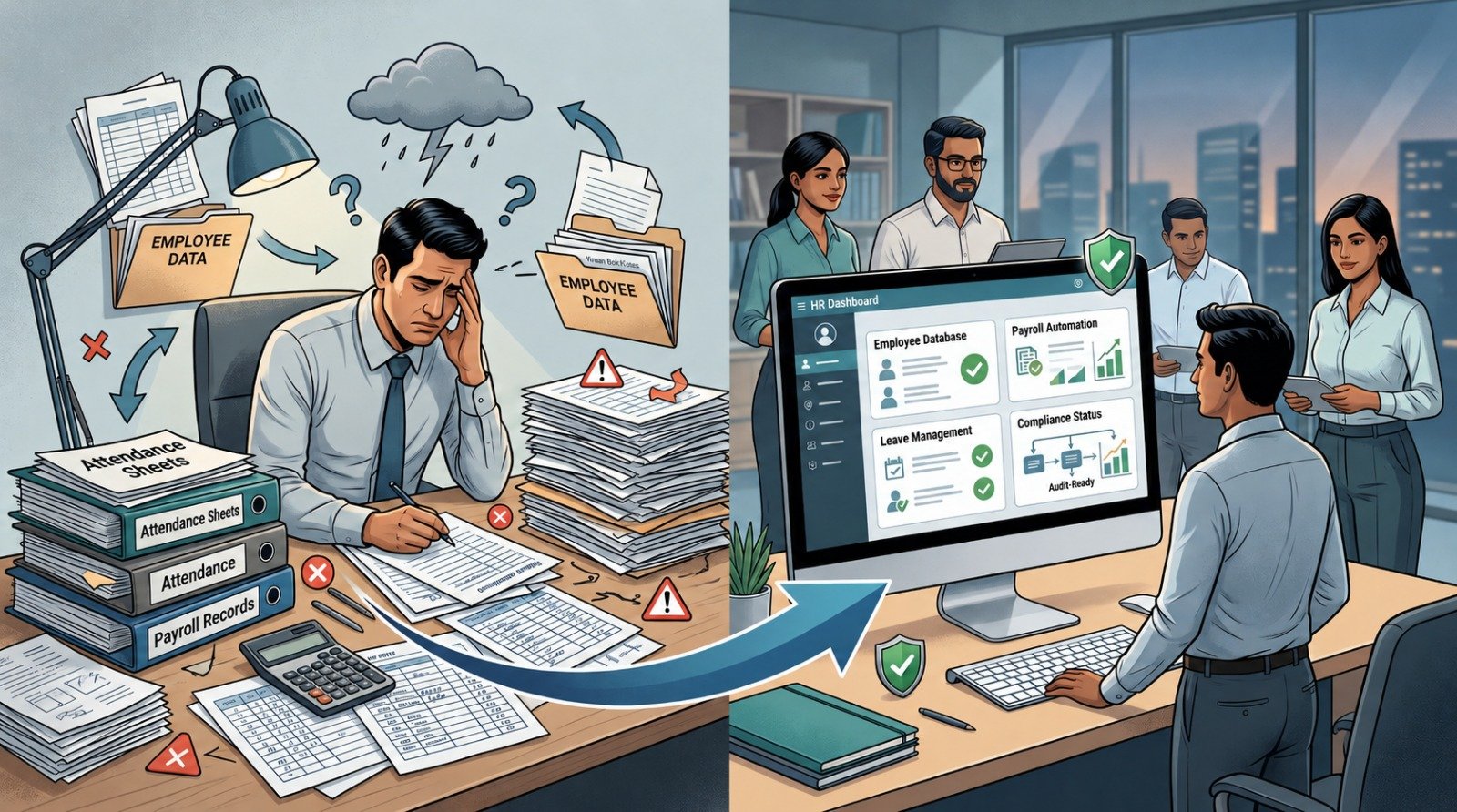
The transition from manual to structured HR does not require a large enterprise budget. Platforms like
ABStart, built specifically for growing Indian companies, offer end-to-end HRMS functionality from
employee onboarding and lifecycle management to statutory compliance automation and payroll
processing within an architecture designed around India’s regulatory requirements.
For SMEs, the specific value lies in compliance automation: salary structures that stay aligned with Code on Wages definitions, automatic PF and ESIC calculations, audit-ready records, and DPDP-compliant employee data handling. These are not optional enhancements they are operational necessities in 2026.
Purpose-built platforms like ABStart are designed specifically for Indian SMEs transitioning from manual HR — covering payroll, compliance, and employee management in one system.
Key Takeaways
• Manual HR on spreadsheets creates direct statutory liability under the EPF Act, Code on Wages,
and the DPDP Act, 2023.
• With four Labour Codes pending full implementation, salary structures not yet aligned with new
wage definitions will require urgent remediation.
• EPFO and ESIC audit activity targeting SMEs is intensifying inaccurate records and delayed filings
carry significant financial penalties.
• The DPDP Act makes unencrypted employee data storage in spreadsheets a compliance violation
with penalties up to ₹250 crore.
• Structured HRMS platforms purpose-built for Indian SMEs like ABStart convert compliance risk
into controlled, audit-ready processes.
References
- Ministry of MSME – MSME at a Glance: gov.in
- Code on Wages, 2019 – Ministry of Labour and Employment: gov.in
- Employees’ Provident Fund Organisation (EPFO) – Section 14B, EPF Act, 1952: gov.in
- Code on Social Security, 2020 – Ministry of Labour and Employment: gov.in
- Digital Personal Data Protection Act, 2023 – Ministry of Electronics and IT: gov.in
- ESIC – Employees’ State Insurance Corporation Official Portal: gov.in
- PRS Legislative Research – Labour Codes Summary: org
- Income Tax Department – TDS on Salary, Section 192: gov.in