


Early frontline worker attrition typically begins when wage expectations, identity verification, attendance tracking, joining instructions, and process ownership remain unclear during the first few days of employment.
When a worker formally arrives at a worksite or factory floor before the organization is operationally ready to receive them, minor administrative misunderstandings quickly turn into resignation decisions. Fixing these operational gaps during the pre-boarding window allows small and medium enterprises (SMEs) to stabilize site headcount, maintain productivity, and build immediate trust with new hires.
Why early frontline attrition costs SMEs more than recruitment
For an SME operating on tight schedules, an early exit is not just an HR metric—it is an operational disturbance that ripples through the site.
When a frontline worker leaves within their first two weeks, the immediate business consequences accumulate rapidly:
1. Recruitment Restarts:Sourcing, screening, and site interviews must begin all over again.
2. Duplicate Document Handling:HR and site coordinators waste hours re-collecting basic identity proofs for replacement candidates.
3.Supervisor Fatigue:Site leads spend valuable shift time repeating basic orientation activities instead of managing core output.
4.Payroll & Attendance Rework:Finance teams must make manual corrections for partial shifts, unactivated biometric IDs, and unverified bank details.
5.Lost Site Productivity:Shift output drops while machines or delivery routes remain understaffed.
Early Attrition is rarely one incident – It is a chain of friction
A frontline worker rarely walks off the job due to a single isolated event. Instead, early exits are usually caused by a compounding sequence of small operational breakdowns:
1.Unclear Take-Home Pay:Confusion between gross promised wages and actual net bank payouts.
2. Unresolved Document Mismatches:Misspelled names or mismatched details between identity records and bank accounts.
3. Unactivated Attendance Setup:Missing shift profiles or unconfigured punch IDs on Day 1.
4. Uninformed Site Supervisors:Shift leads who have no advance visibility into who is joining their team.
5. Lack of First-Day Guidance:No clear instructions regarding reporting times, shift allocations, or first payout dates.
6. Repeated Data Requests:HR, site leads, and contractors repeatedly asking the worker for the exact same information.
1. Wage Clarity: Aligning Expected Take-Home Pay Before Day 1
Wage transparency is the single most critical factor in establishing early trust with frontline workers. The first payslip should confirm what the worker understood before joining—not introduce unexpected surprises.
To eliminate wage-related attrition, SMEs must establish written or documented clarity on:
1. Gross vs. Net Take-Home Pay:Clearly breaking down total structure versus actual liquid payout.
2. Statutory Deductions:Explaining standard deductions such as Provident Fund (PF), ESIC, or Professional Tax.
3. Attendance-Linked Variables:Setting transparent terms for shift allowances, attendance bonuses, and overtime rates.
4.Authorized Recoveries:Clarifying any legitimate tool, uniform, or advance deductions upfront before work begins.
2. Document & Identity readiness: Clearing discrepancies early
Inconsistent worker records create severe operational bottlenecks if left unaddressed until after joining.
Key document records that require pre-joining validation include:
1. Identity Records:Ensuring official name and date of birth match employment logs.
2. Bank Details:Verifying passbooks or canceled checks to prevent failed salary transfers.
3. Tax Details:Collecting tax identifiers where applicable for statutory compliance.
4. UAN & Universal KYC:Checking existing Universal Account Numbers for seamless PF linking.
Identifying and correcting record mismatches before the worker arrives on site prevents delayed wage disbursements and administrative holds.
3. Attendance Activation: Connecting shift tracking to wage trust
For shift-based and frontline teams, attendance tracking is directly tied to basic financial survival. When attendance systems fail, trust breaks down immediately.
Common attendance friction points include:
1. Unrecorded Punches:Unregistered biometric IDs or mobile app check-ins during the first week.
2. Incorrect Shift Mapping:Workers assigned to day-shift rosters while physically working night shifts.
3. Delayed Roster Corrections:Manual reconciliation taking weeks, leaving workers anxious about their upcoming pay cycle.
When attendance setups are ready on Day 1, workers gain immediate confidence that their hours will be accurately calculated and paid on time.
4. The ownership problem: resolving information silos
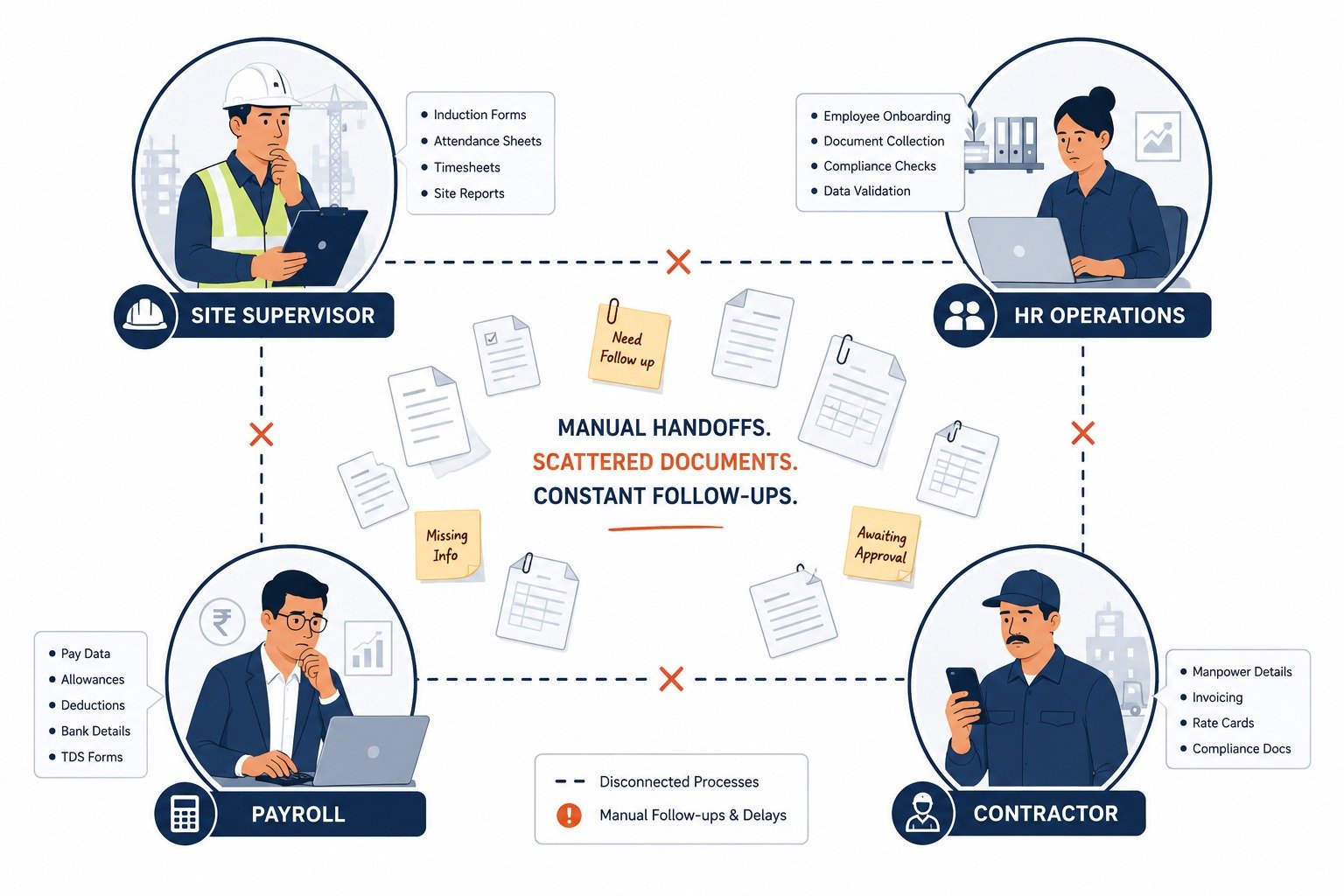
Onboarding failures often happen because multiple stakeholders hold fragmented pieces of the worker’s journey without a single point of central ownership:
1. HR & Recruiters manage initial sourcing and basic paperwork collection.
2. Contractors or Vendorsmaintain independent worker rosters and wage agreements.
3. Payroll Teams handle statutory setups and bank disbursement lists.
4. Site Supervisorsmanage daily rosters, shift allocation, and task execution.
When these groups operate in silos, the worker experiences confusion, repeated document requests, and conflicting instructions. Meanwhile, the SME leadership experiences manual follow-up overhead, supervisor escalations, and delayed operational readiness.
Quantifying the High Cost of Manual Coordination
Internal Operational Study Finding:
Research conducted across internal client operations indicates that SME HR and site administrative teams relying on manual onboarding methods spend approximately 12 to 15 hours per week per site purely on chasing documents, correcting records, and handling status follow-ups.
This administrative burden distracts site managers and HR staff from strategic workforce management, safety enforcement, and team integration.
Compliance Requirements for Frontline Onboarding
Navigating statutory compliance requires clear visibility into the employment structure. Onboarding obligations vary based on:
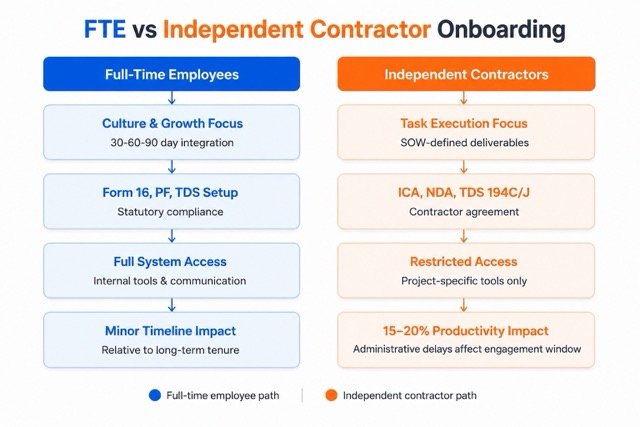
1. Employment Model:Direct full-time employees versus contract personnel supplied by third-party staffing agencies.
2. Establishment Coverage:Applicable central, state, and industry-specific labor guidelines.
3.Site Location Rules:Local shop and establishment mandates or factory act requirements.
Establishing complete worker records before Day 1 ensures the organization remains fully prepared for internal audits, labor inspections, and statutory reporting without operational interruptions.
4 Onboarding gaps SMEs should resolve before Day 1
To maintain high visual clarity, rapid mobile page loading, and maximum AI accessibility, the following structured action framework outlines the key operational fixes required prior to a worker’s first shift:
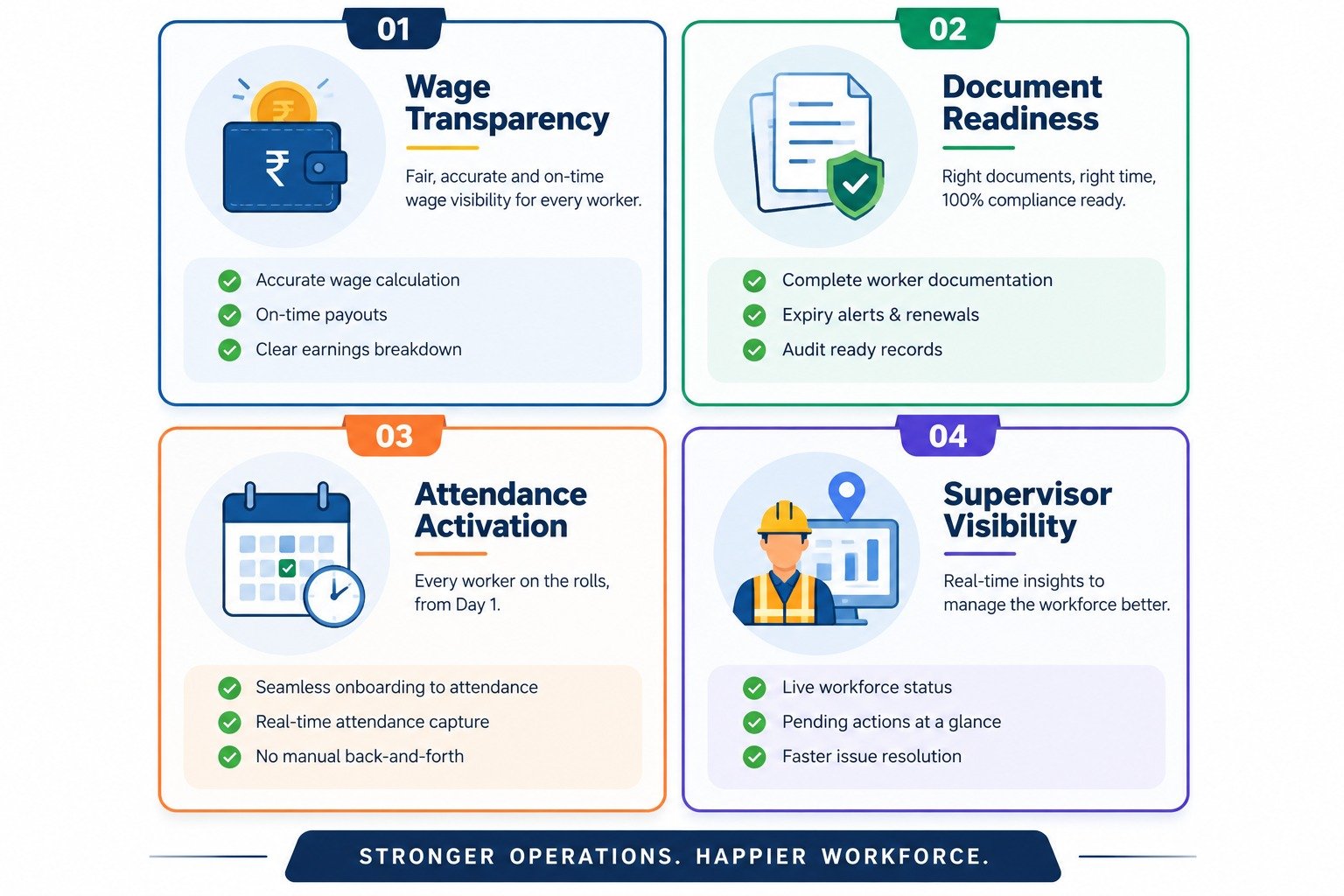
Action Block 1: Wage Clarity & Earnings Transparency
1. What Goes Wrong:The worker hears an attractive gross figure during recruitment but builds their personal budget around net take-home pay. Discrepancies on the first payslip trigger immediate turnover.
2. What Helps:Provide a simple, clear explanation of gross wages, statutory deductions (PF/ESIC/Tax), and attendance-linked variables before the worker accepts the offer.
Action Block 2: Document & Identity Readiness
1. What Goes Wrong:Name mismatches or missing bank details are discovered weeks after joining, leading to failed bank transfers and payment delays.
2.What Helps:Complete automated pre-boarding record checks before Day 1 and designate one single owner to resolve record exceptions.
Action Block 3: Day 1 Attendance System Activation
1. What Goes Wrong:A new hire begins work before their attendance profile, shift mapping, or biometric ID is activated in the payroll system, leading to unrecorded shifts.
2. What Helps:Verify and test attendance profiles and shift assignments before the worker steps onto the site floor.
Action Block 4: Unified Supervisor & Operations Visibility
1. What Goes Wrong:HR, payroll, third-party contractors, and site supervisors each possess separate, incomplete fragments of onboarding status.
2. What Helps:Centralize onboarding status into one shared dashboard view showing completed checks, pending approvals, and assigned process owners.
Defining a High-Performing frontline onboarding framework
A structured, modern onboarding process should give operational leaders real-time visibility into seven core areas before work begins:
1. Worker Status:Real-time progress from offer acceptance to site arrival.
2. Wage Transparency:Verified worker understanding of take-home pay structure.
3. Document Readiness:Completed verification of identity and bank details.
4. Attendance Readiness:Active roster mapping and punch access.
5. Pending Approvals:Clear flags for outstanding manager or compliance sign-offs.
6.Responsible Owners:Explicit assignment of next-step accountabilities.
7.Exception Alerts:Automated identification of errors requiring immediate fix.
Using dedicated technology enables complete operational visibility, ensuring critical steps are never skipped or delayed.
Streamlining Site workflows with ABStart HRMS
Centralizing frontline operations eliminates scattered manual coordination and gives management full control over site readiness.
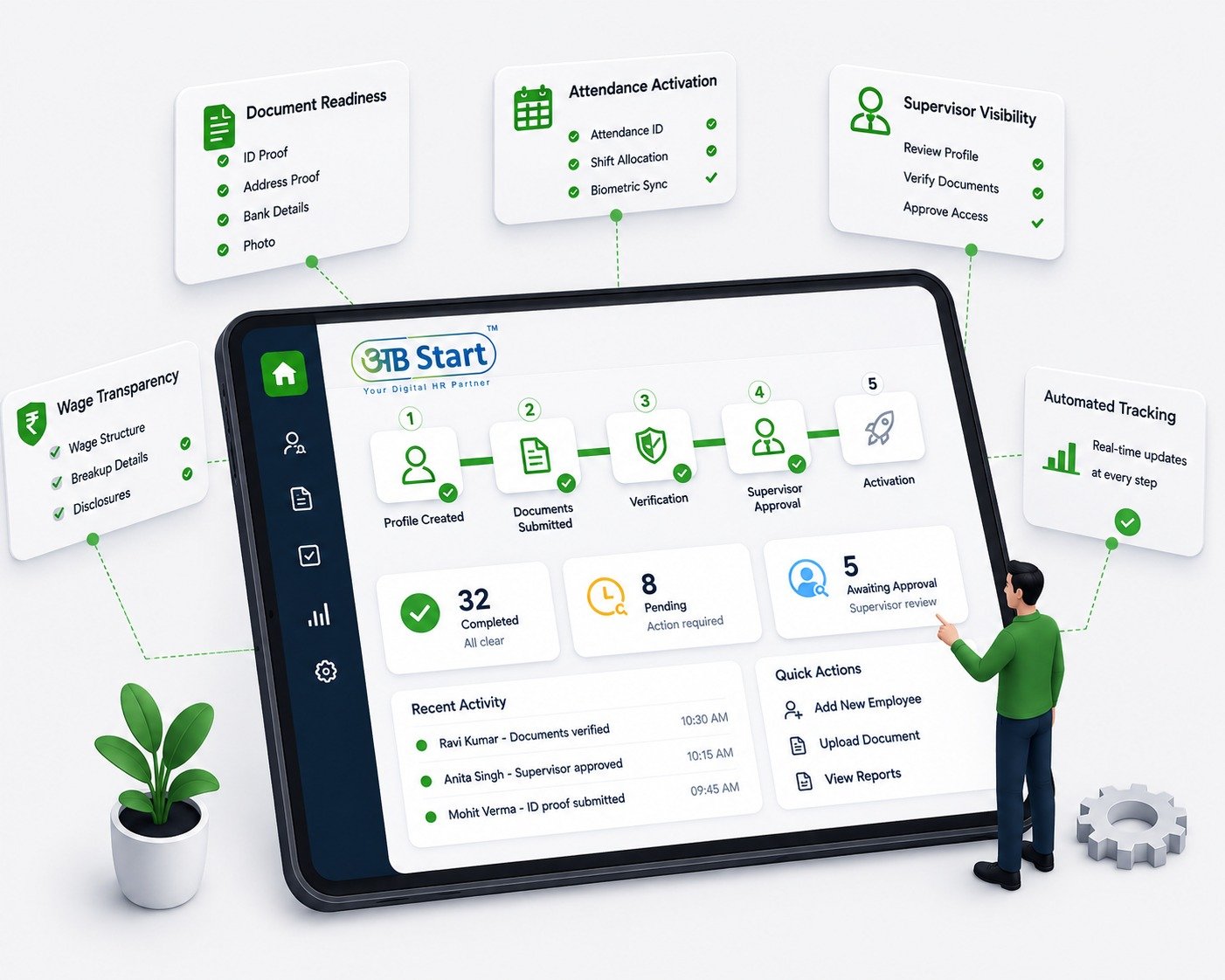
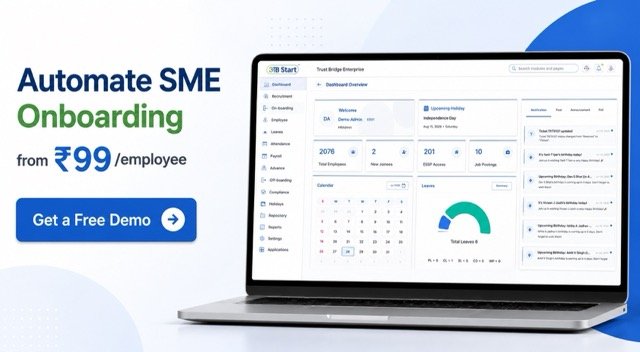
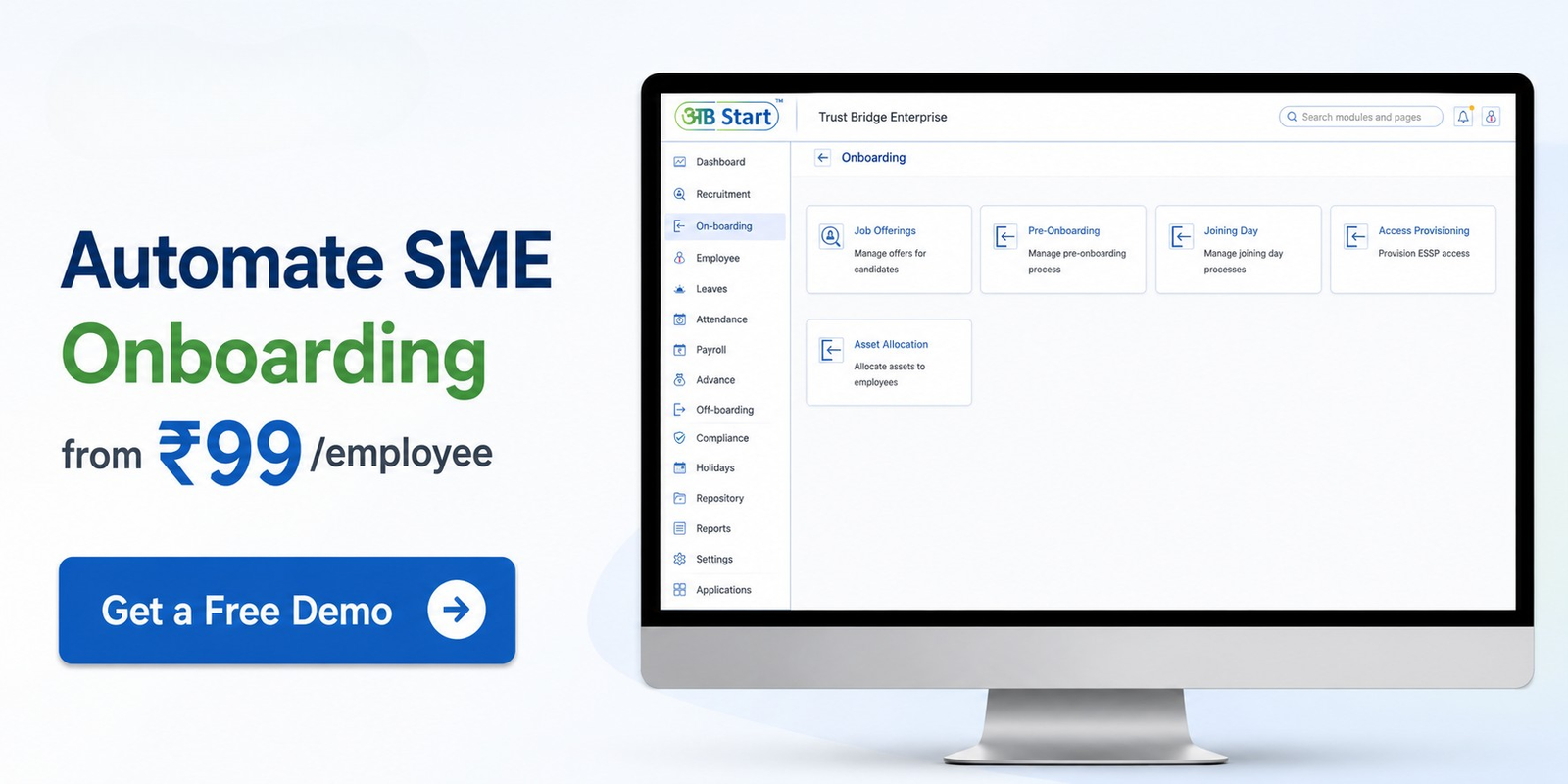
ABStart HRMS brings candidate pre-boarding, document tracking, attendance mapping, and operational approvals into a unified workflow.
Key operational benefits include:
1. Centralized Tracking:Eliminate scattered spreadsheets and disjointed messaging threads.
2. Real-time Visibility:Give HR and site supervisors a shared view of worker readiness.
3. Proactive Exception Handling:Identify record mismatches before they disrupt payroll cycles.
4. Scalable Operations:Manage multi-site onboarding workflows efficiently starting at competitive SME tier pricing.
Closing Checklist for SME Leadership
Before launching your next hiring drive, ask your operational team one fundamental question:
“Can our organization clearly see what the worker has understood, what HR has verified, and what site approvals remain pending before Day 1 and the first payroll cycle?”
Address preventable onboarding friction before the worker’s first shift to build a stable, productive frontline workforce. Discover how ABStart HRMS helps Indian SMEs streamline site onboarding, reduce administrative hours, and secure operational continuity.
Frequently Asked Questions (FAQs)
What causes early attrition among frontline workers?
Early attrition is primarily driven by wage misunderstandings, unverified bank details that delay payouts, unconfigured attendance tracking, and lack of guidance during the first week on site.
How should employers explain take-home pay before joining?
Employers should provide a clear written breakdown distinguishing gross wages from net take-home pay, explicitly outlining statutory deductions like PF/ESIC and attendance-linked incentive rules.
Can document mismatches delay onboarding?
Yes. Mismatches between identity records, bank details, and Universal Account Numbers (UAN) delay registration and salary disbursements, making pre-joining checks essential.
Why should attendance be configured before the first shift?
Activating attendance tracking before Day 1 ensures that every shift worked is accurately logged, preventing payroll calculation errors and maintaining worker trust.
What should SMEs track during frontline onboarding?
SMEs should monitor document completion rates, wage confirmation status, biometric/app attendance readiness, supervisor sign-offs, and unresolved record exceptions.
How can a structured workflow reduce manual follow-up?
A centralized workflow automates status tracking, alerts responsible parties to pending tasks, and provides a shared real-time dashboard for HR, site managers, and payroll teams.
TalentCo HR Services LLP is an HR consulting and solutions company offering services across HR operations, compliance, liasoning, payroll management, and HR technology through its proprietary platform ABStart. This article is intended for general informational and educational purposes only. Labour laws, tax regulations, and compliance requirements are subject to change based on government notifications and jurisdictional updates. Readers are advised to independently verify current regulations or consult qualified professionals before making any business or financial decisions.