
Onboarding paperwork is not background admin work. It is the first real evidence a candidate gets of what working at your company will actually feel like. Small administrative frictions—repeated forms, silent gaps, and last-minute instructions—quietly erode the excitement a candidate felt when they accepted the offer.
Modern employee onboarding software automates the repetitive parts of onboarding—data entry, digital signatures, compliance reminders, and document tracking—while keeping candidate communication, welcome messages, and manager check-ins personal. This removes administrative delays and duplicate forms without making new hires feel like a system ticket.
When Does Candidate Onboarding Actually Start?
Onboarding starts the moment a candidate accepts the offer, not on their first working day. The gap between acceptance and joining can run from a few days to several weeks. During this window, every delay or unclear message adds doubt. Fast, clear communication in this pre-boarding period builds confidence before the candidate has even started work.
What candidates evaluate during this pre-boarding window:
1 ) Response time after acceptance — tells them whether the company follows through on commitments quickly.
2) Clarity of next steps — tells them whether the internal HR and administrative process is organised.
3)Tone of communication — tells them whether they are treated as a priority or an afterthought.
“If the very first interaction a candidate has with your company feels like a bureaucratic tax audit, you risk losing their momentum before Day 1. Exceptional talent does not disengage due to a lack of interest; they disengage when unnecessary administrative friction leads them to question your operational culture” – Shailendra Dhamdhere, Founder & MD, ABStart HRMS.
What Are the Most Common Onboarding Challenges for New Hires?
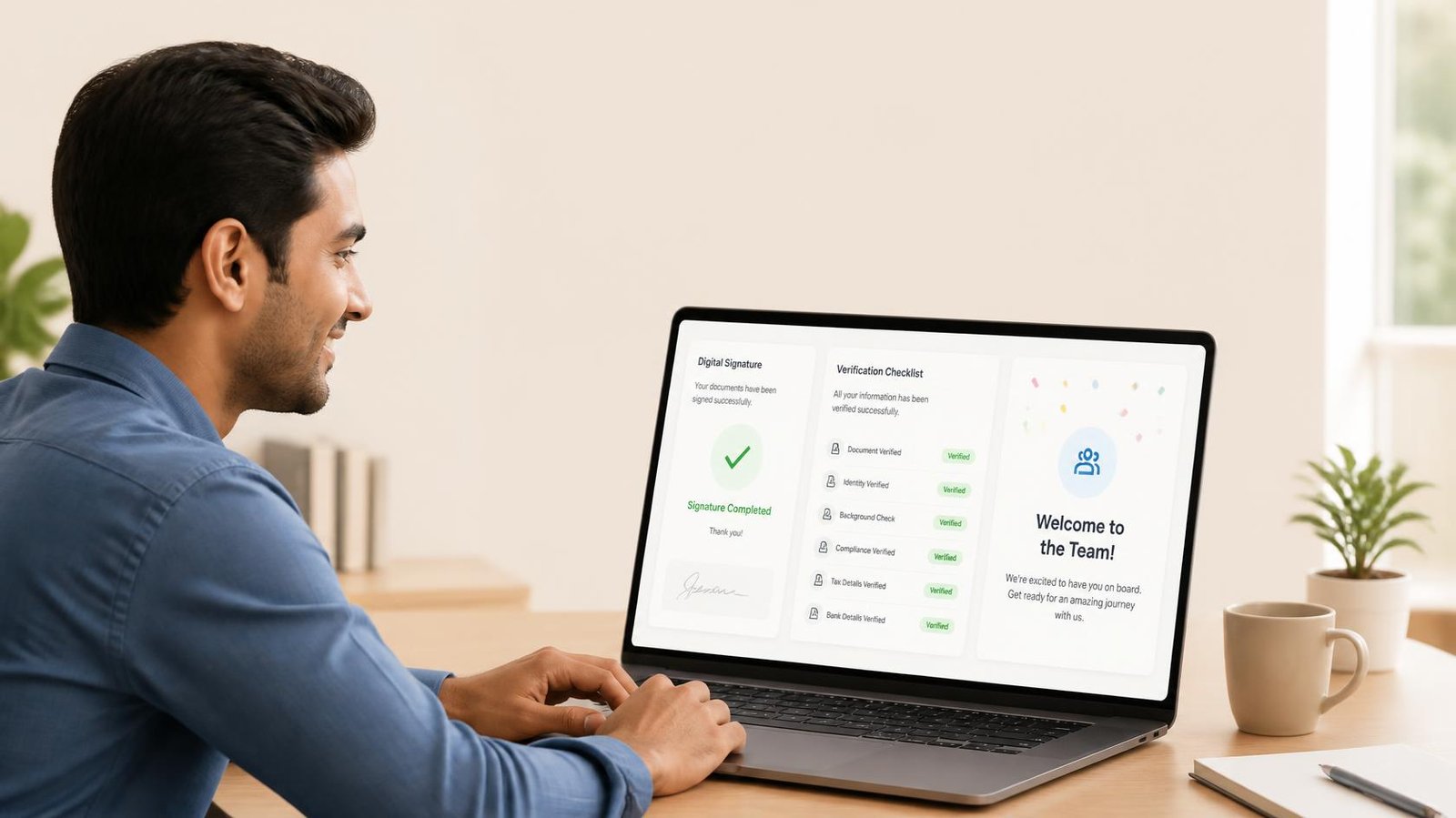
Full-time hires in Indian SMEs most often lose confidence over five recurring administrative issues: repeated forms, manual errors, invisible approvals, late system access, and no single point of contact. None of these is dramatic alone. Stacked together, they signal that the company’s internal process is less organised than its interview process appeared to be.
1. Too many forms: The same personal and tax details (Aadhaar, PAN, bank details) get requested across disconnected documents, which feels tedious before the person has even started.
2. Manual errors and rework: Missing fields or wrong file formats mean extra back-and-forth emails and added delay.
3. Slow, invisible approvals: Background checks and document sign-offs move forward with zero visibility for the candidate, so all they experience is silence.
4. Late access setup: Laptops, email IDs, and software logins arranged a day before joining—or sometimes after—lead to an idle first day.
5. No single point of contact: Candidates don’t know if HR, the hiring manager, or IT owns their question, so it goes unanswered.
Implementing dedicated employee onboarding software removes manual spreadsheet tracking and provides candidate workflows with full operational transparency.
Why Do Contract Workers Need Dedicated Onboarding Workflows?
Contract workers face a heavy paperwork load with far less time to complete it. Their roles often start on short notice, with scope and reporting lines defined loosely. A paperwork delay that barely affects a two-year full-time employee can consume a large share of a short-term contract.
To put it in perspective: a two-week onboarding delay is a minor dent for someone on a two-year tenure, but for a three-month contractor, that same two-week delay eats up 15% to 20% of their entire engagement value.
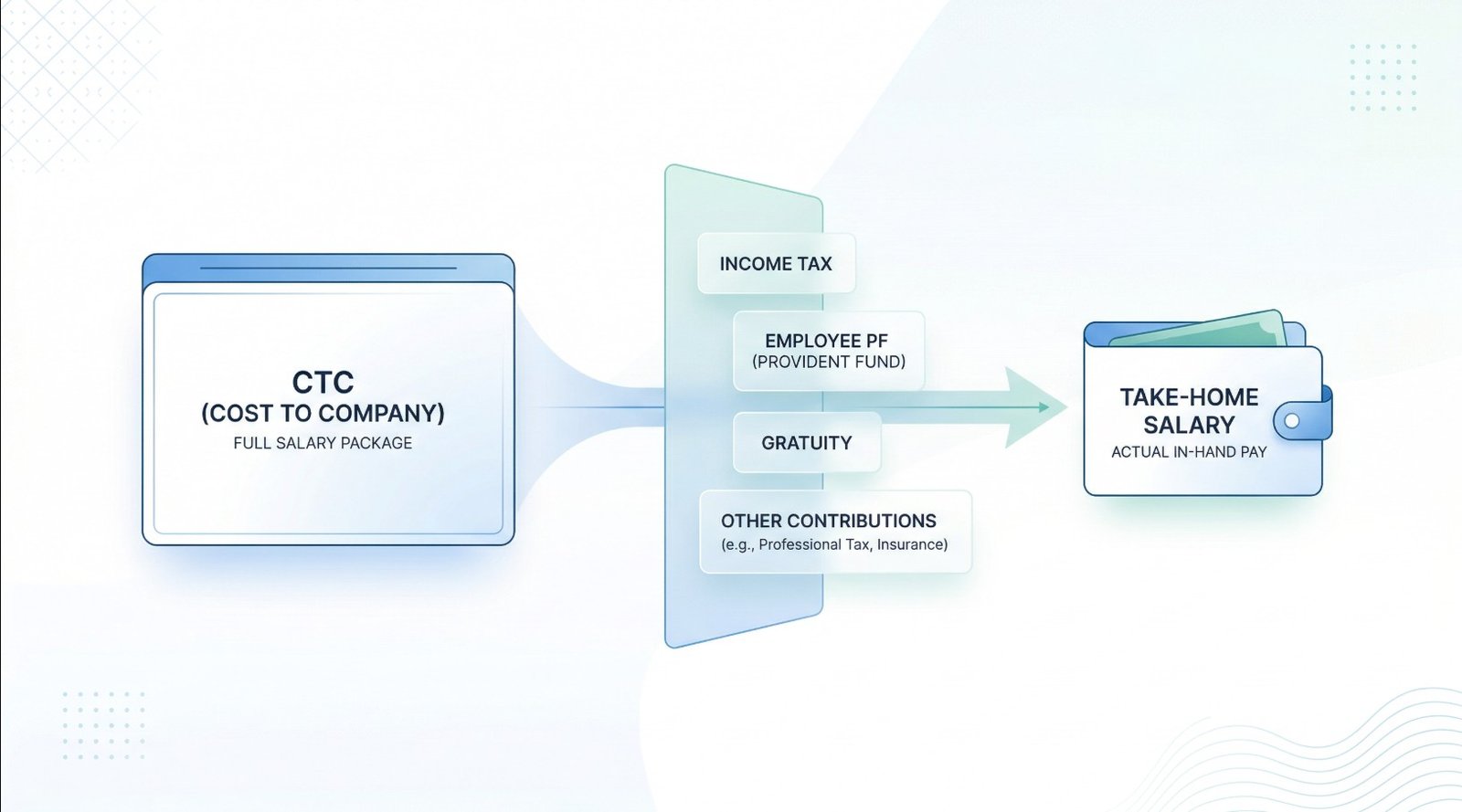
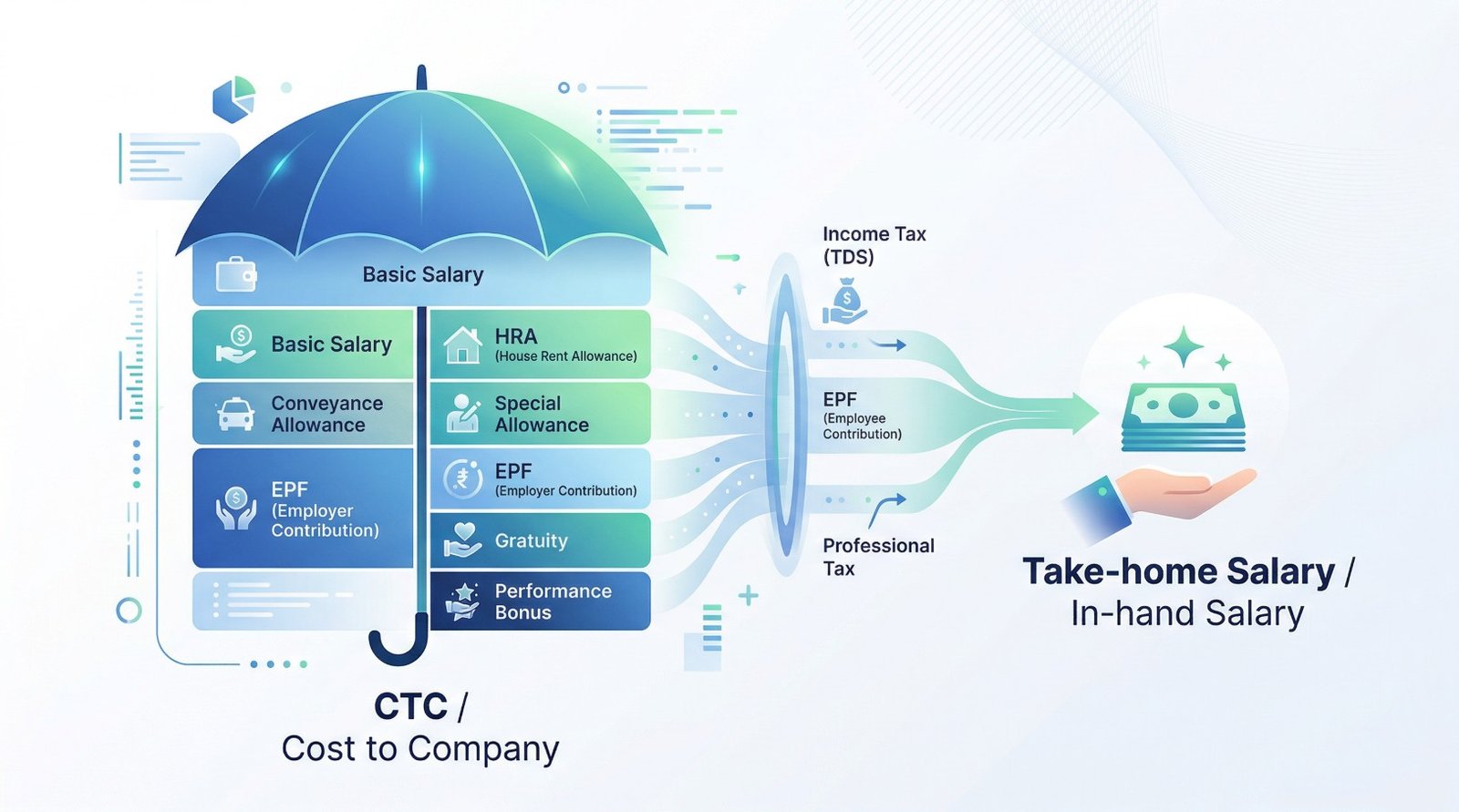
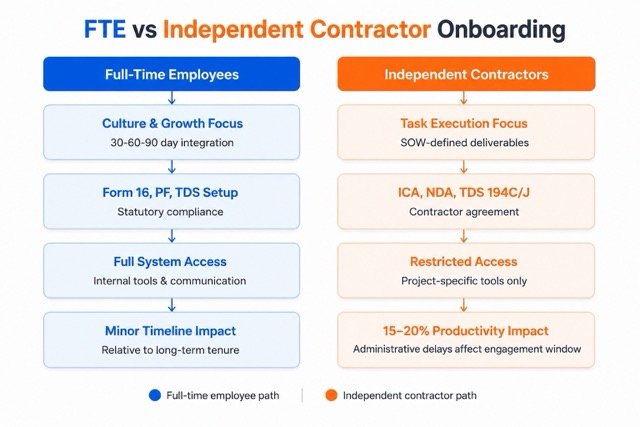
Furthermore, treating contractors like full-time employees creates misclassification risks under Indian labor laws. Full-time onboarding focuses on long-term culture and statutory setup (Form 16, Provident Fund). Contractor onboarding must focus strictly on task execution, Independent Contractor Agreements (ICA), Statements of Work (SOW), tax deductions (TDS under Sections 194C or 194J), and role-restricted tool access.
Structural Onboarding Differences (FTEs vs. Independent Contractors)
| Onboarding Dimension | Full-Time Employees (FTEs) | Independent Contractors |
|---|---|---|
| Primary Focus | Culture, long-term 30-60-90 day growth, team integration | Task execution, immediate deliverables, SOW scope definition |
| Compliance & Tax Setup | Form 16, Provident Fund (PF), Statutory TDS setup | Independent Contractor Agreement (ICA), NDA, TDS (Section 194C / 194J) |
| Tool & System Access | Full organisational systems, communication & internal tools | Role-restricted, project-specific software and database access |
| Impact of Administrative Delays | Minor relative to total long-term tenure | Consumes 15–20% of the total engagement productivity window |
How Do Onboarding Delays Affect Candidate Interest?
Candidates rarely walk away over a single massive failure. Interest drops through repeated small signals: silence after acceptance, confusion about next steps, and waiting for responses. None of this is usually intentional. It happens because no single system or owner is tracking the full onboarding journey.
-
- Silence after acceptance signals low operational priority.
-
- Confusion about next steps signals internal disorganization, even if the rest of the company runs smoothly.
-
- Waiting on approvals or replies signals that the candidate’s time does not matter yet.
Individually, none of these feel severe. Together, they push candidates to quietly compare this experience against other offers sitting in their inbox. With the cost of replacing a new hire ranging between 90% to 200% of their annual salary in rupees, removing pre-boarding friction directly protects company retention and saves leadership energy.
Why Do Appointment Letters and Compliance Automation Matter?
A written appointment letter confirms role, compensation in INR, and employment terms in writing. It protects both the employee and the company if disputes arise later. For contract workers, the agreement must also state scope and duration clearly, since ambiguity here is the most common source of contractor disputes in Indian businesses.
Using automated onboarding software ensures compliance documentation is:
1. Issued on time rather than as an afterthought during the pre-boarding window.
2. Stored securely and consistently in a central digital repository.
3. Easy to retrieve later for statutory verification, tax filings, or internal audits.
Skipping any of these steps turns simple paperwork into a compliance risk down the line.
What Does Day 1 Readiness Actually Look Like?
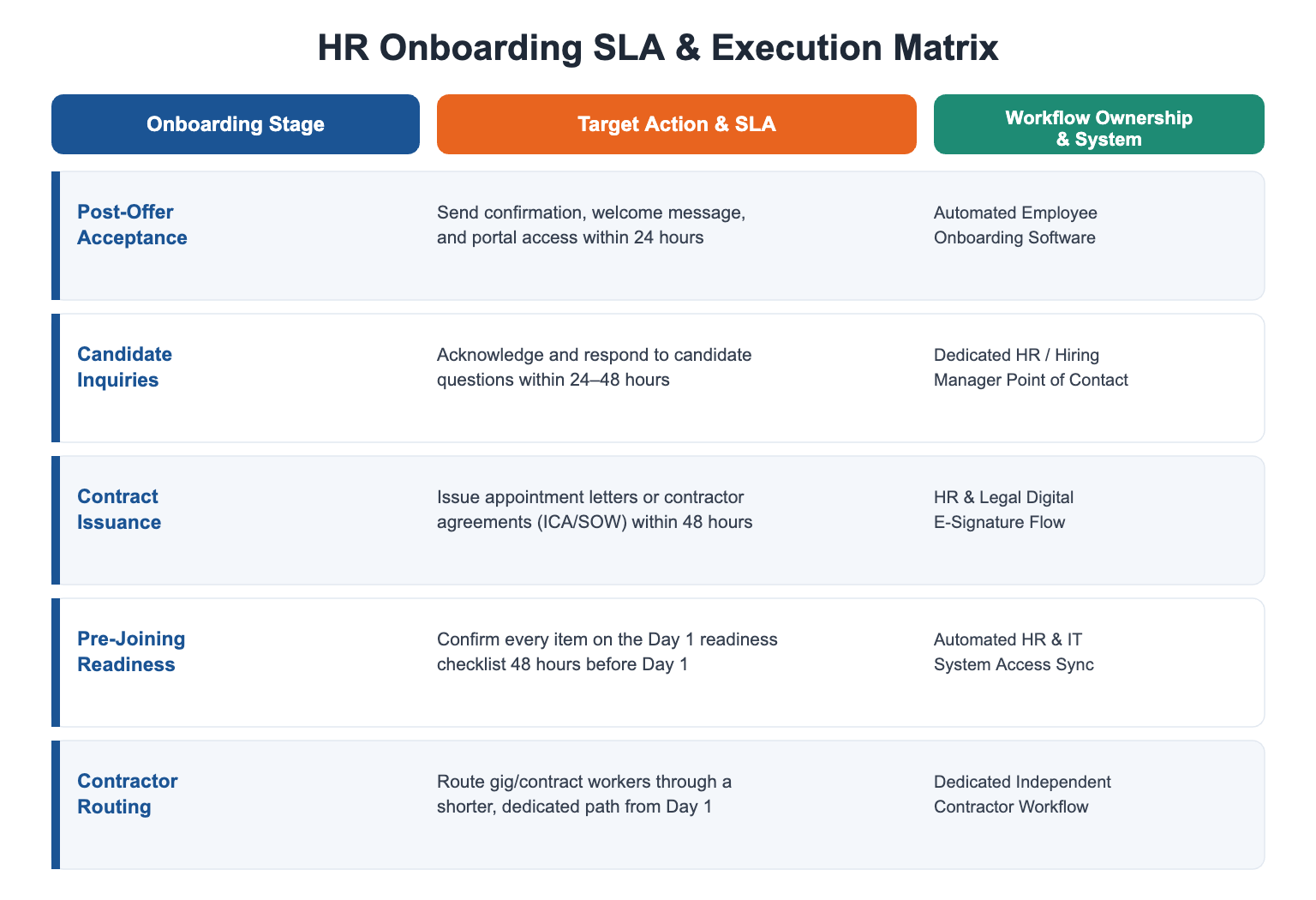
Day 1 readiness means reporting details, contact information, and system access are confirmed before the candidate’s start date. A short readiness message sent one to two days before joining removes most first-day uncertainty. Missing any one of these items shifts the first day from productive to idle.
Before every joining date, HR teams must confirm:
-
- Reporting details: Clear reporting time and location, or a direct meeting link for remote joiners.
-
- Point of contact: Name and direct contact details of the assigned HR contact or manager.
-
- Joining instructions: Clear, step-by-step instructions for the first morning.
-
- System readiness: System access, email ID, and equipment are tested and verified in advance.
What Actions Should HR Teams Take, and by When?
Each onboarding stage has a clear failure point if left unmanaged. Setting a fixed timeline for each stage turns onboarding into a measurable process instead of a set of loose intentions.
Ready to Eliminate Paperwork Friction?
Shifting from manual spreadsheets and scattered forms to automated digital workflows protects your hiring investments and keeps candidates engaged.
Experience how ABStart HRMS streamlines candidate pre-boarding, automates tax compliance, and manages employee records seamlessly, starting at just ₹99/employee.
Get a Free Custom Demo of ABStart HRMS
Sources & Benchmark Compliance References:
-
- 1. TalentCo HR Master Context & Strategy Primer — ABStart HRMS Dataset (Entry pricing ₹99/employee; TDS 194C/194J compliance).
-
- 2. Onboarding Intelligence Dataset — Pre-boarding ghosting metrics (45%), Day 1 no-shows (27%), and turnover costs (90%–200% of annual salary in ₹).
-
- 3. Indian Statutory Tax Guidelines — Indian Income Tax Act (TDS deduction under 194C/194J for contractors vs. Form 16/PF for FTEs).